Larry Torres
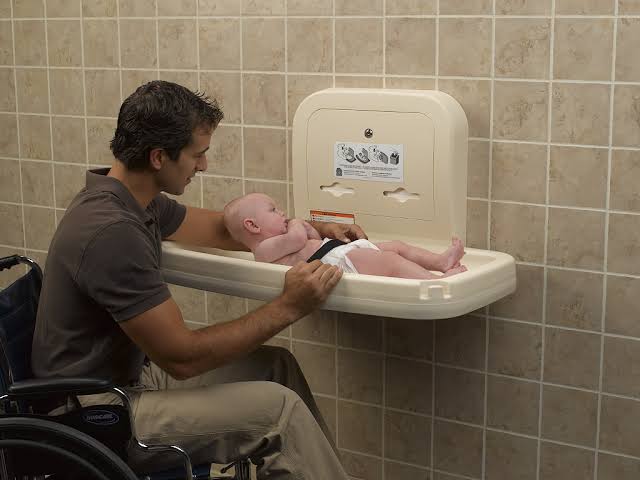
Baby changing stations became an expected restroom fixture because parents and caregivers of all genders need clean, safe places to change infants in public buildings, and facilities that provide them signal that families are welcome. Airports, restaurants, retail stores, offices, and government buildings now plan for changing stations as part of standard restroom design.
The Bathrooms Accessible in Every Situation Act became federal law in 2016 (Congress.gov).
Why do changing stations matter to families?
Changing stations matter to families because without them, caregivers are forced to change infants on restroom floors, countertops, or in vehicles. A dedicated station provides a clean, secure surface designed for the task.
Benefits for caregivers
- A safe, stable surface for changing infants
- Better hygiene than floors or counters
- Safety straps to secure the child
- Convenience during outings and travel
- A sense that the facility welcomes families
Facilities that fail to provide changing stations often hear about it from customers.
How did federal buildings address changing stations?
Federal buildings addressed changing stations through the Bathrooms Accessible in Every Situation Act, known as the BABIES Act, signed into law in 2016. The law calls for baby changing stations in both men’s and women’s restrooms in certain federal buildings that are open to the public.
Federal building implementation
Building requirements across federal properties are implemented within a large portfolio of federal buildings (U.S. General Services Administration). State and local rules may also address changing stations in other building types, so design teams should review the requirements that apply to each project.
How changing stations fit accessory packages
Changing stations fit into full washroom accessory packages, with commercial manufacturers offering them alongside dispensers, dryers, and grab bars in coordinated lines (American Specialties, Inc.).
Why are changing stations placed in all restrooms?
Changing stations are increasingly placed in men’s, women’s, and family restrooms because caregiving responsibilities are shared across genders. Limiting changing stations to women’s restrooms leaves fathers and other caregivers without an option.
Common placement strategies
- Stations in both men’s and women’s restrooms
- Stations in family or all-gender restrooms
- Stations in accessible single-user restrooms
- Multiple stations in high-traffic facilities like airports
Family restrooms offer a private option that serves caregivers of any gender and families with children of different ages.
What features make a changing station safe and durable?
Features that make a changing station safe and durable include a sturdy mounting system, safety straps, a surface that resists bacteria and cleans easily, and a folding mechanism that operates smoothly. Commercial stations face frequent use and cleaning.
Features to look for
- Secure wall mounting to structural backing
- Safety strap to restrain the child
- Smooth, easy-to-clean surface
- Controlled folding mechanism
- Liner dispenser for added hygiene
- Durable materials that resist impact and staining
How do changing stations affect accessibility planning?
Changing stations affect accessibility planning because they are wall-mounted elements that project into the restroom when open and have operable parts that users must reach. Placement should consider clear floor space, routes, and reach.
Accessibility standards for changing stations
Reach ranges, operable parts, and protruding objects are addressed in the 2010 ADA Standards and apply to elements like changing stations when those elements are provided (U.S. Department of Justice). Design teams should confirm how the provisions apply to each project with the authority having jurisdiction.
Planning considerations
- Clear floor space in front of the open station
- Projection into circulation paths when open and closed
- Reach to the station surface and operating parts
- Location outside door swings
Where should changing stations be installed?
Changing stations should be installed in locations with adequate space, structural backing, and proximity to handwashing. Caregivers should be able to wash their hands easily after changing a child.
Placement near sinks
Installation near sinks improves hygiene. Placement away from toilet compartments and high-traffic paths improves comfort and safety.
How should changing stations be maintained?
Changing stations should be maintained through regular cleaning, inspection of mounting and hinges, replacement of worn straps, and stocking of liners where dispensers are provided. A dirty or broken station is almost as frustrating as none at all.
Maintenance checklist
- Clean and sanitize surfaces on a regular schedule
- Inspect mounting hardware and hinges
- Replace damaged safety straps
- Refill liner dispensers
- Post instructions for use where helpful
How do changing stations support business goals?
Changing stations support business goals by making facilities more welcoming to families, who often choose restaurants, stores, and venues based on amenities. Providing changing stations in all restrooms communicates inclusion.
Benefits for retailers and restaurants
Retailers and restaurants that accommodate families may see longer visits and repeat business. Airports and transit facilities improve the travel experience for families with young children.
How do changing stations fit into family and all-gender restroom design?
Changing stations fit into family and all-gender restroom design as core fixtures rather than optional add-ons. Single-user family restrooms allow a caregiver to bring a stroller, change an infant, and assist an older child in the same private space.
Layout in family restrooms
Designers can place the changing station away from the toilet and near the lavatory, with enough room for a stroller to park without blocking the door. Including a hook for bags and a shelf for supplies makes the room more usable. Family restrooms in airports, malls, and stadiums often become the preferred option for caregivers traveling with young children.
Why are changing stations now part of standard restroom design?
Changing stations are now part of standard restroom design because families expect them, federal policy has addressed them in federal buildings, and facility owners recognize their value. Planning for them from the start is easier and less costly than retrofitting later. Restrooms that include safe, clean, and accessible changing stations serve a broader range of users and reflect a commitment to the people who use the building.